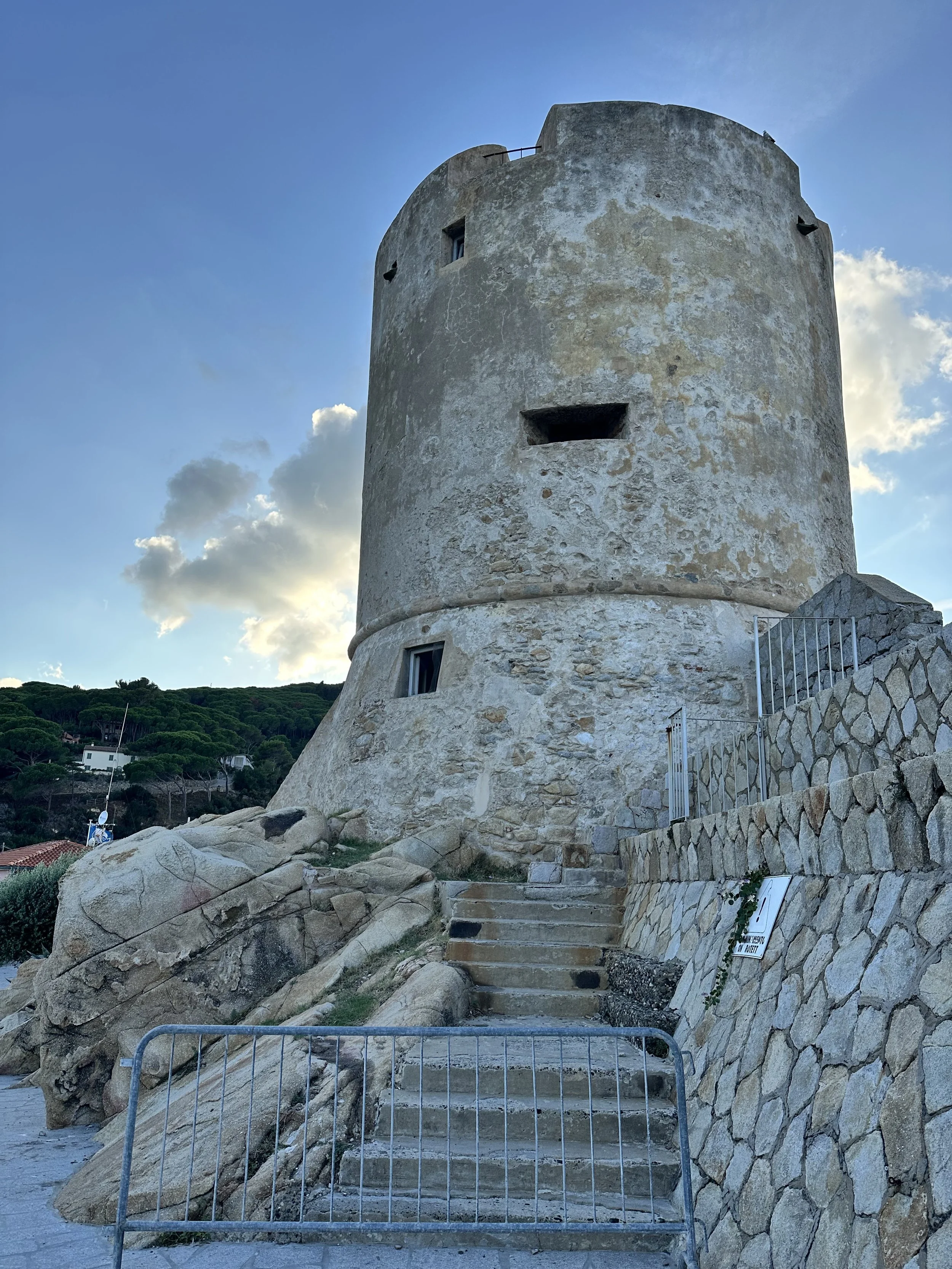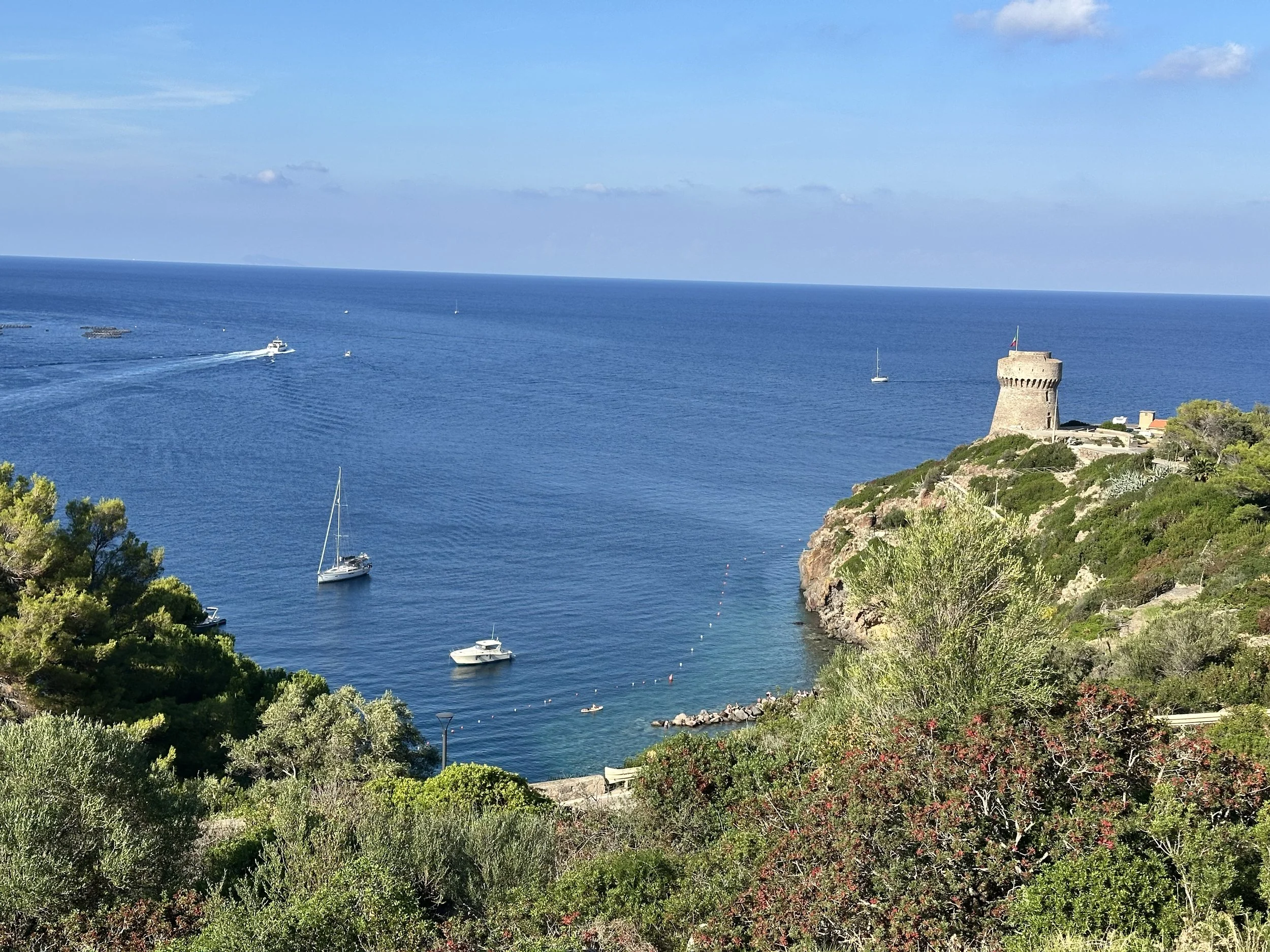
Watchtower overlooking the anchorage at Capraia.
Capraia. High above the anchorage off Capraia, the Torre del Porto perches on a cliff. At night, when it’s illuminated, the tower looks like a giant mushroom.
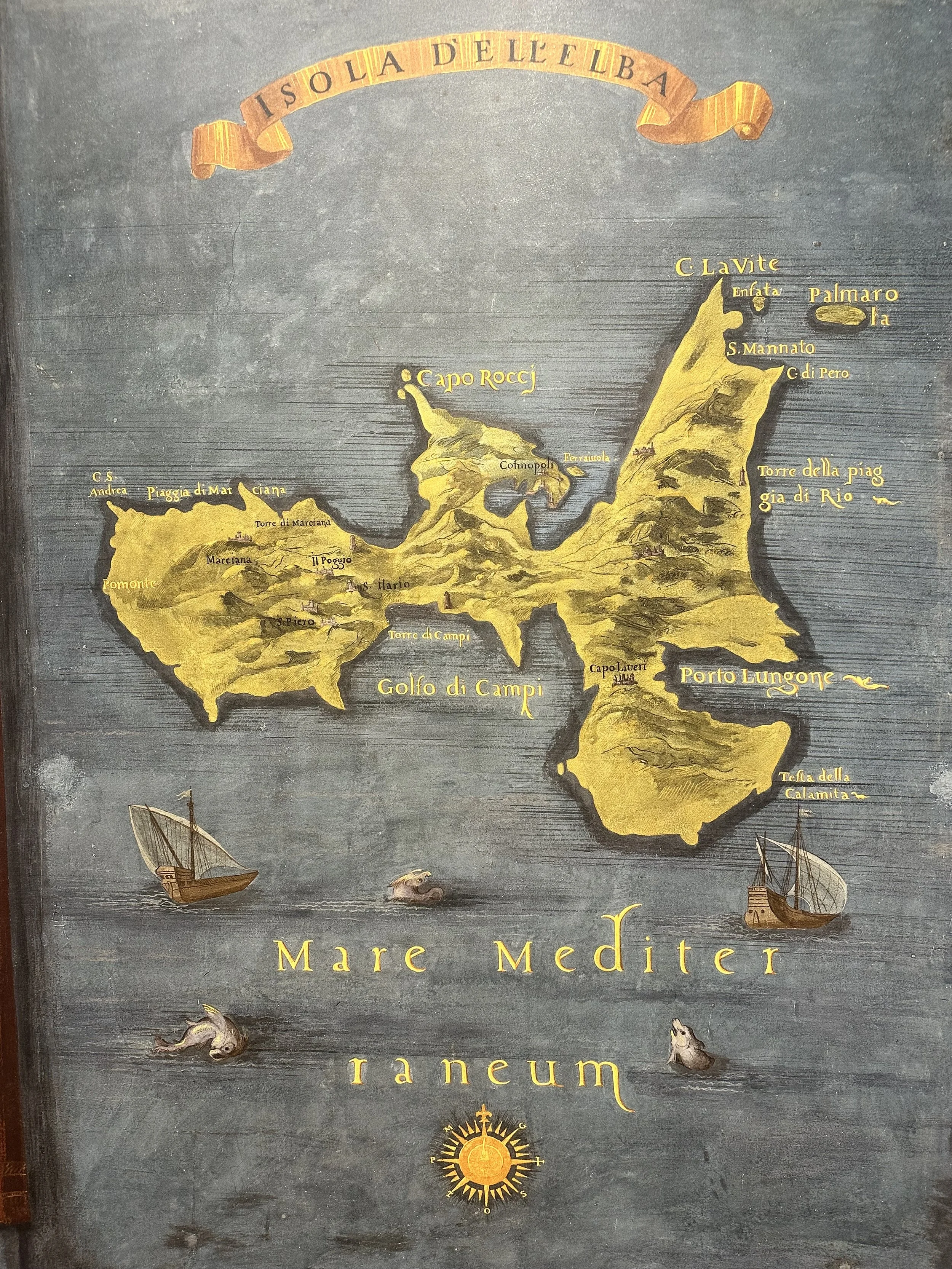
By day we take a stony mule track up to the tower, which overlooks the Tyrrhenian Sea. On a clear day you can see all the way to Elba from here, but the Torre del Porto is no mere lookout. Its upper platform has room for six cannons. On an information board set into the rough masonry, I read that the tower was built in 1541 to ward off raids by pirates and corsairs.
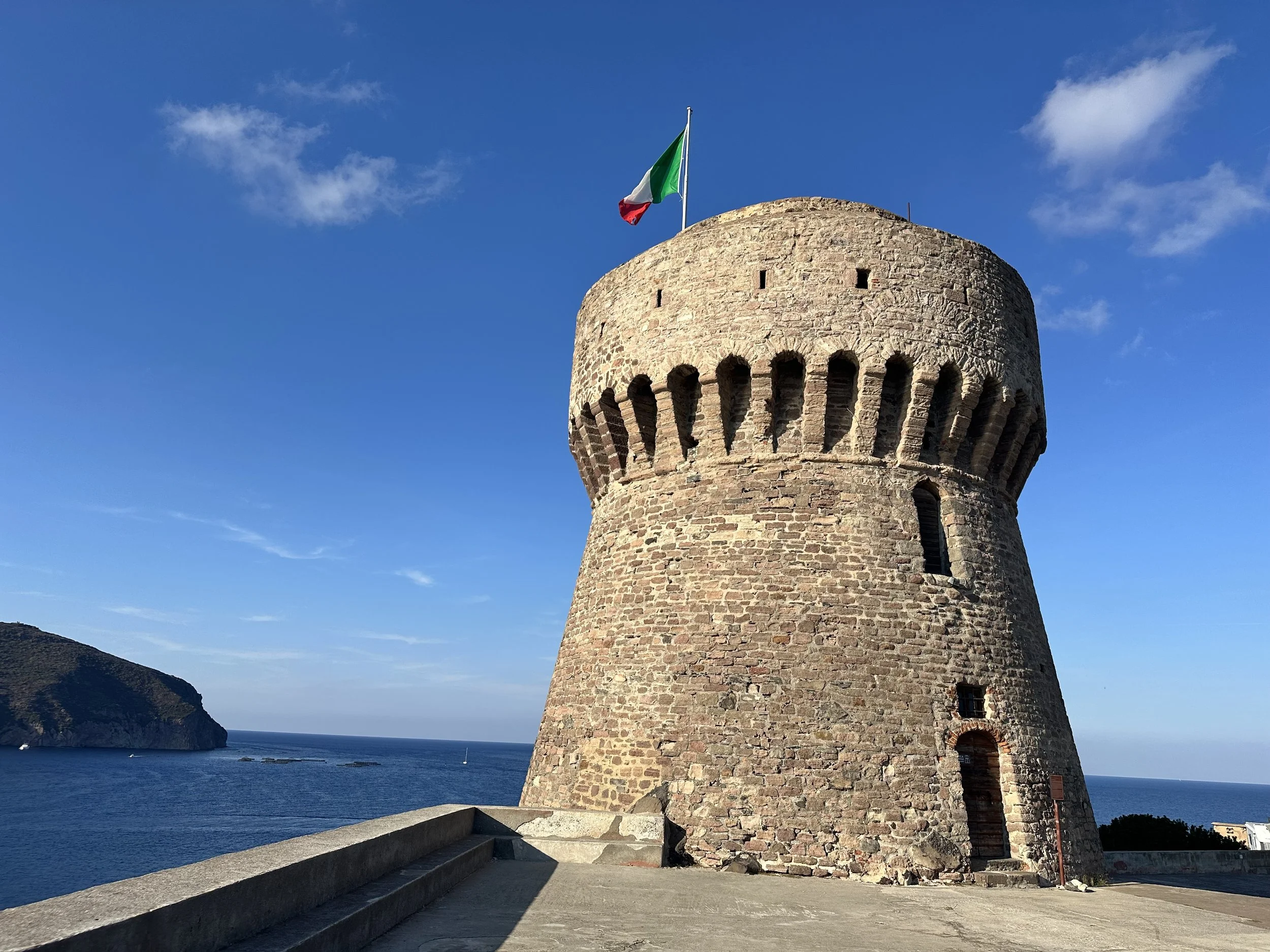
Torre del Porto.
Loud live music drifts up to us from the harbor. The islanders and visitors are celebrating the Squid Festival. There is no longer any trace of the battles that once took place on this soil.
Yet, until the 19th century, Christian and Muslim corsairs wreaked havoc here. They would raid entire regions on both sides, looting and destroying everything they could lay their hands on, killing the locals or selling them into slavery.
One of the most successful ottoman corsairs was Dragut Reis, who attacked Capraia in 1540. On June 6, he arrived on the tiny island with his galleys, galliots, and fustas, and began bombarding the village. According to Roberto Moresco, the sound of the cannon fire could be heard as far away as Bastia, on the island of Corsica. After four days, the people of Capraia surrendered. Dragut devastated the island and carried off the surviving inhabitants, mostly women, the elderly, and children, into captivity.
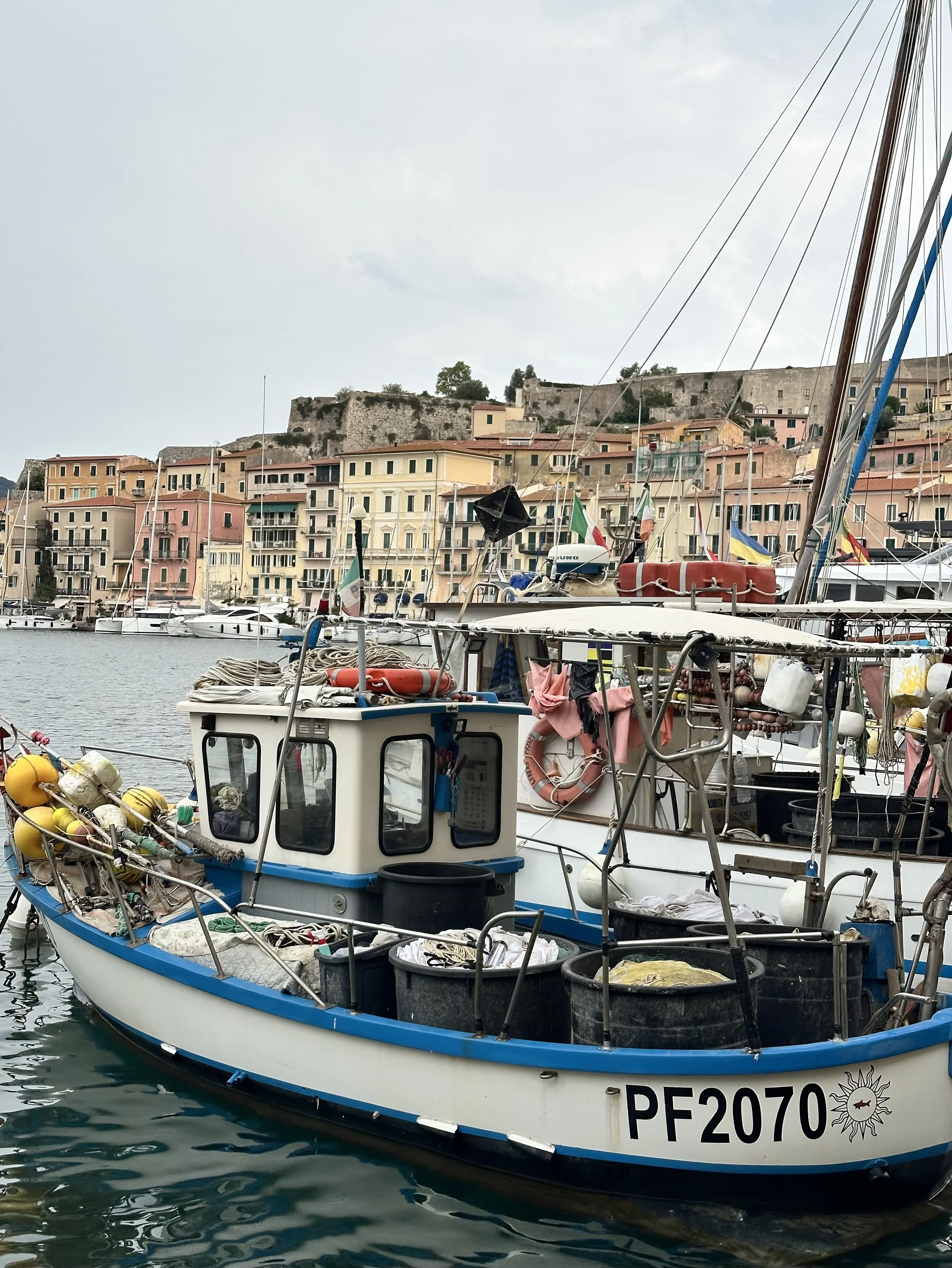
Fishing vessels in front of Marina Cosimo de Medici, Porteferraio.
Portoferraio. Following the trail of the corsairs, we sail on toward Elba with the wind on our beam. We moor Asja in the Marina Cosimo de Medici, right in the heart of Portoferraio. The marina stretches along the promenade. Passersby can look straight into the cockpits of the vessels.
In the museum at Forte Falcone, high above town, I come across a posthumous portrait of Dragut Reis. With his blood-red turban and curled mustache, he looks exactly as one would imagine an Ottoman corsair.
Born near Bodrum around 1485, Dragut worked his way up as a seafarer. From 1520 on, he sailed under Barbarossa, serving in the vanguard of the Ottoman fleet. In 1556, he became governor-general of Tripoli. According to historian Eloy Martín Corrales, writing in the journal Studia Historica, he was regarded as cruel, daring, and exceptionally capable.
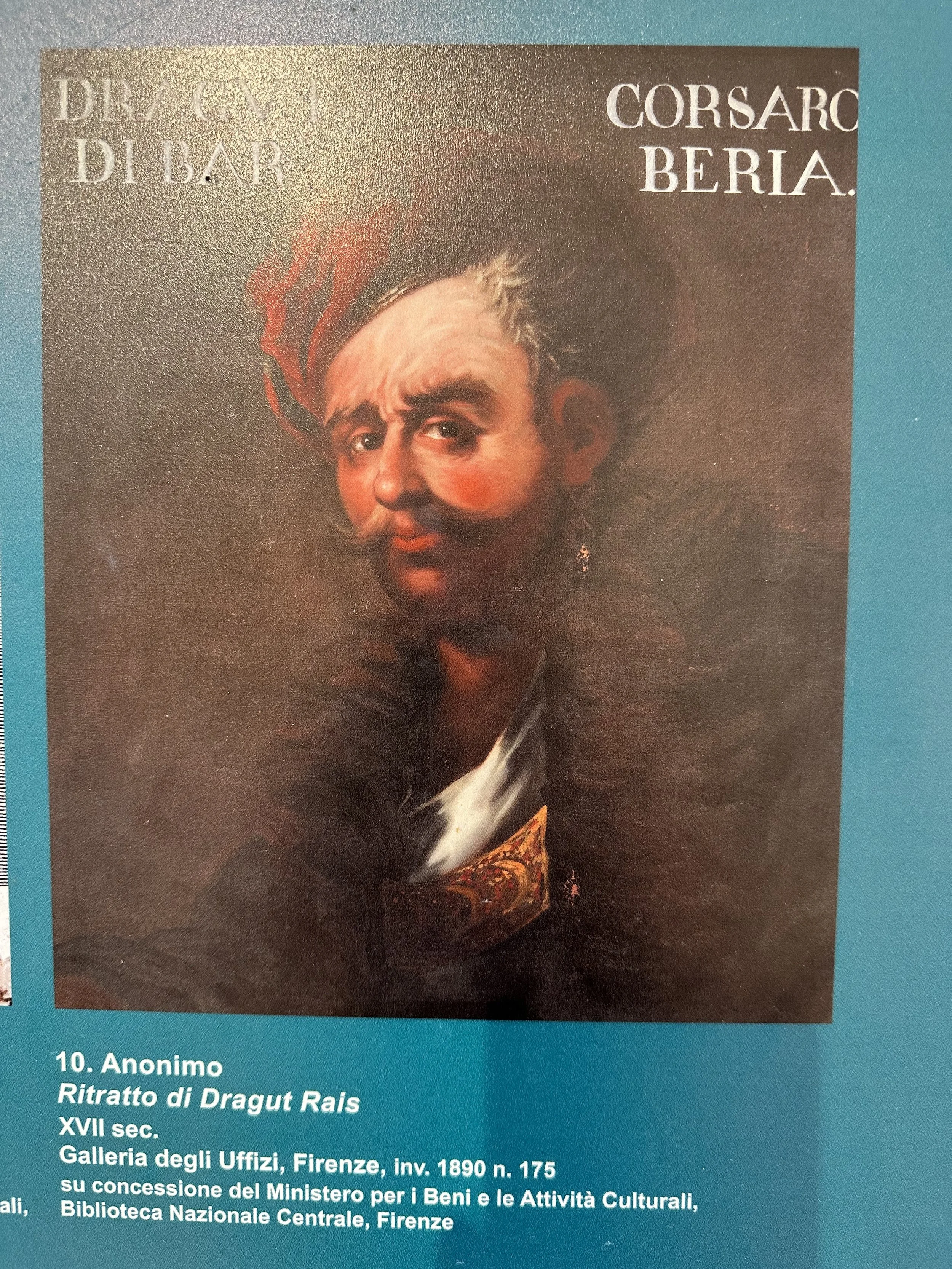
Enemies: Dragut…
Naturally, Dragut set his sights on Portoferraio. In 1552, he had already destroyed two older fortresses on Elba, and a year later, he returned with an Ottoman-French fleet 150 ships strong.
That he failed at Portoferraio was down to Cosimo I de Medici, who has been working on a fortress since 1548. In Forte Falcone, I come across a reproduction of a portrait of him. The painter, Bronzino, pays more attention to Cosimo’s armour than to his face, as if he intended to portray him as a great protector.
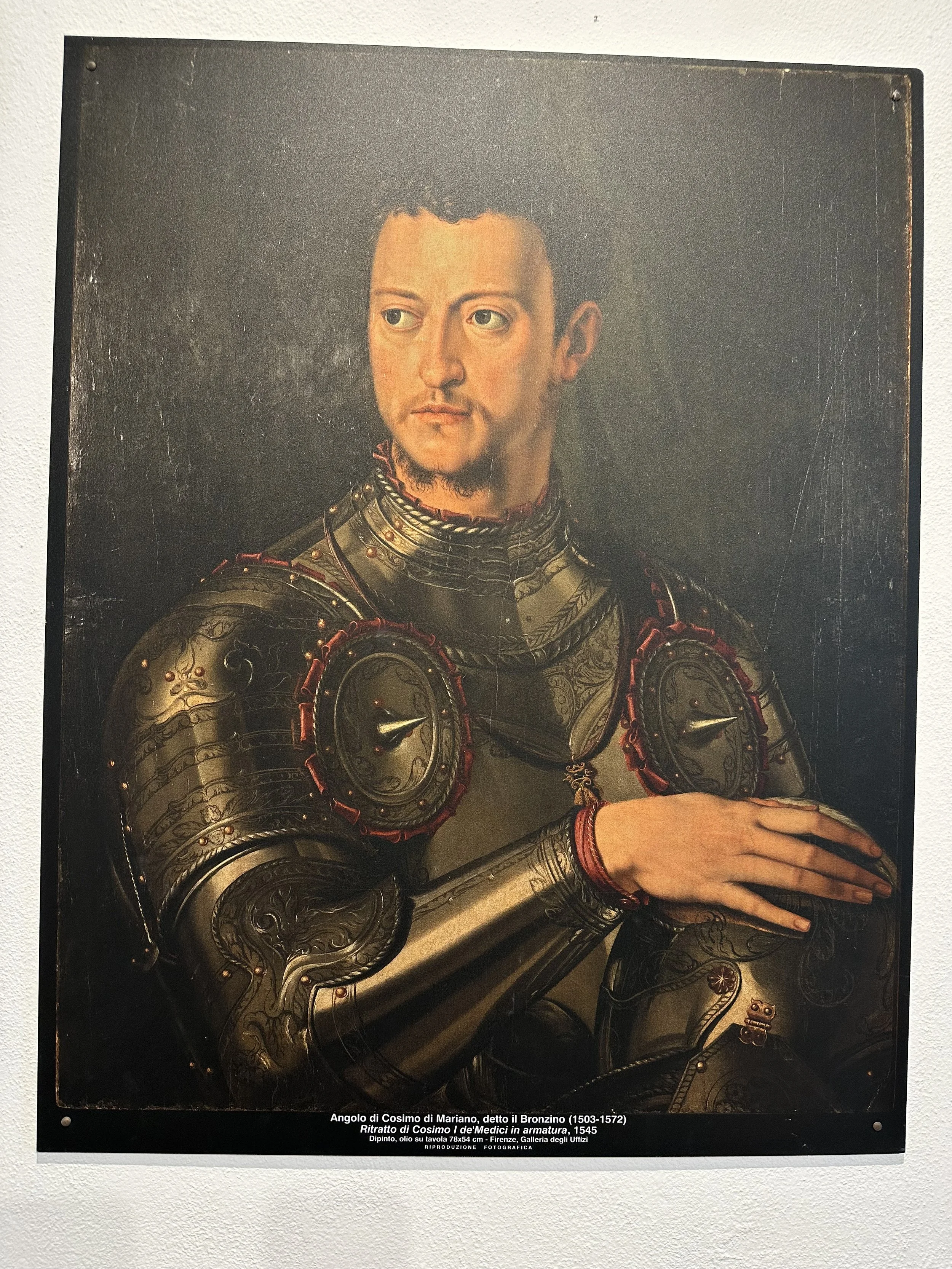
… and Cosimo.
Pirates or corsairs?
For the victims, it made little difference who was attacking them; legally, however, there were nuances. The word corsair derives from the Italian corsa, meaning a privateering expedition.
Corsairs sailed with the blessing of a ruler, often carrying a letter of marque on their ships. It authorized them to attack their enemies and coastlines, with a portion of the spoils going to the authority who commissioned them.
Dragut served the Sultan, much as his Genoese counterpart, Admiral Andrea Doria, served various kings and emperors. Their galleys, rowed by captives, were swift and capable of navigating close to the shore, but they were ill-suited for the open sea.
In the Mediterranean, it was also a matter of perspective: a man who was an honorable corsair to one side was viewed as a pirate by his adversaries.
Caribbean pirates, in contrast, were outlaws in every sense. They failed to forge lasting alliances which proved to be fatal in the long run. Eventually, they even alienated the colonies that had once tolerated them. So their era was far shorter than that of the Mediterranean corsairs: in 1718, the British cleared out the main pirate stronghold in the Bahamas, and shortly thereafter, the golden age of piracy came to an end.
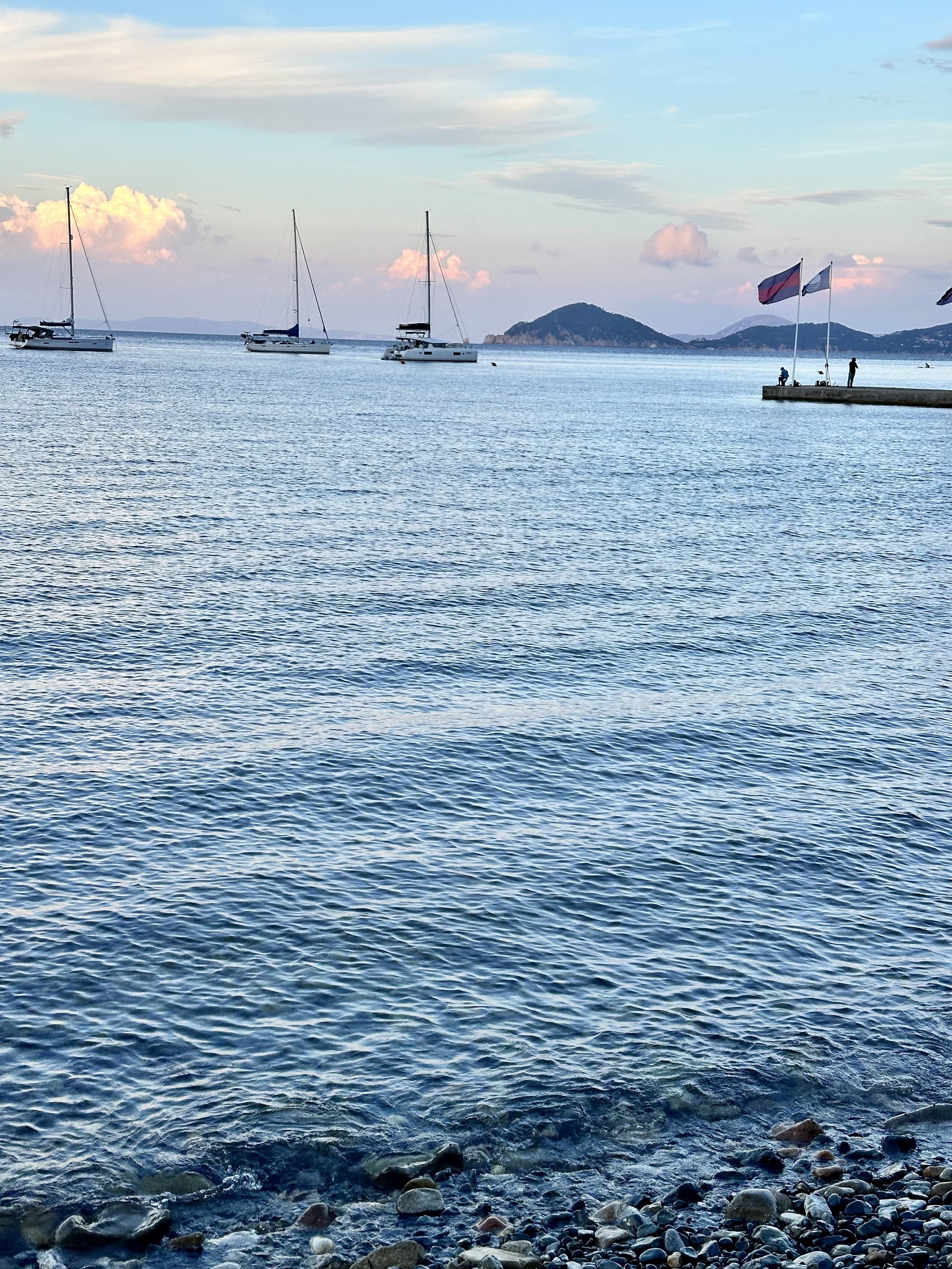
Lovely anchorage at Marciana.
Today, no one on Capraia fears the sight of enemy galleys on the horizon. The sturdy defensive towers along the coast now are popular tourist attractions, offering magnificent views.
Yet at night, when the Torre del Porto glows above the anchorage, I cannot look up without thinking of Dragut and his adversaries.